When we first went to the Iskenderun Technical University (ISTE) Library of the Iskenderun disaster coordination center, we realized the coordination officers were stuck between the ear/shoulder phone and others trying to tell their problems in front of them…. Let’s go back to the first day.
On Monday, February 6, our daily routine at home began to be shaken by the foggy disaster news spread over the phones. I was not in a state of shock, both because I got used to the awareness that “we have to live with earthquakes” after the 99 earthquakes, and the devastating effect of the disaster did not reach me and my surrounding. I was a little nervous and more observant mode. Arda’s school was already off because of the non-falling snow. After leaving Arda to his nanny, I headed to work. Traffic flowed more calmly. The cold silence of the disaster once again dominated the workplace, as after all earthquakes. The hands that say hello rise a little lower, the smiling eyes misted by the news of the disaster. People were interestingly acting more collectively in moments like this. The teams were sharing their silence together at the same lunch table by looking at their phones and chilling their meals.
Even though I tried to connect to work to clear my mind, the news on the phone, the WhatsApp groups established in the morning, and the posts made within the scope of the disaster had already disrupted my concentration. In this state of uncertainty, I contacted people in our search and rescue community to get accurate information. My friends, who directed their careers in this field, started to tend to the region and they were not saying good things. The team, who had not seen each other for years, spontaneously decided to go to the disaster area for search & rescue. I had the time for preparation until my friends came to Istanbul from Antalya and prepare their bags. Primary schools and upper grades were also suspended for an indefinite period.
On the way to Iskenderun, I was following the volunteering works on WhatsApp groups, the positions of our team’s different vehicles, and the activity status of the arrivals. Even though I was a single person going to search and rescue, I was feeling like 10’s with the phone in my hand (!). In fact, it would be best if I slept and rested, but it didn’t work, my hand was constantly going to the phone and I was getting lost in every single page there.
This phone effect decreased when we started working. In the disaster zone, the telephone had become a tool, not an object that consumes time. For example, some friends were using it for rescue planning by looking at the map of the area before it was destroyed. This luxury lasted 2 days. Three days after the disaster, we could not reach the old Iskenderun maps. We were a little upset about the situation, but we had to keep working.
As it was the first time I came to a disaster area, I was going to see the coordination center for the first time. I was curious. We entered a modern building with high beams but low doors. A long crescent-shaped queue stood in front of us for food. To the right of the crescent, there were dispersed communities waiting to communicate with AFAD authorities. “Please wait for the coordination desk as only 2 people, not with all team” announcements meant nothing to those in the line. Everyone was in shock, not just the Coordinators. The communication was being conducted in a triangle between the phone in the ear/shoulder, the trembling hand on the empty paper, and the teams trying to tell their needs on the opposite side of the table. None of the 5 coordination desks lined up like a wall had a computer. All work was done over the phone. One of my teammates pointed out one of the main reasons for the disruptions we will experience in coordination over the next 4 days, saying, “Oooh, how nice it is, you think you’ve done a job after every call and you get a tiny little prize:)”
While we were in the coordination center on the first night, in order not to be idle and to work together for calibration 2 of our members moved into the coordination queue for night work requests and the others into the crescent-shaped queue for dinner. When it was my turn, the soup pot was empty, but the crescent was the same length. One person entered the coordination area with a huge box, stating that there was soup in it, and said, “Come on, volunteers, let’s bring the hot soup there are more in the car.” The people sitting in the middle area looked at each other and said “we are not volunteers, we are operators”. After hearing that, we moved to our vehicles for the task with the awareness that we are in a coordination center in the disaster area. The police left the area without waiting for us there and came one street away from the area where we were going to work. Of course, there may be a lot of work to be done in case of disaster, but shouldn’t the law enforcement officers stay with the rescue team in the working zone as a part of the coordination? We were the 6th team directed to the same area where a sound was heard under the rubble. This was the result of phone-directed coordination due to working phone signals. The victims had also telephones in their hands. They wanted to save lives under the rubble just like us. The only difference is that they wanted to save their or their loved ones’ lives. Every time after hearing a sound from the rubble the hands were going to the phones. There is no record of what the coordination on the other side should do, which building is in what condition, which street is where and what is close to where…. The actual area map was hung by AKUT at the end of the 3rd day in the disaster coordination center. In return for this kindness, AKUT was removed from its place opposite the disaster coordination center on the 4th day.
We woke up in the cars and were redirected to another area where the phone was effective again for the second day’s mission. The balance of the coordination was upset this time not by the repetitions of the calls, but by the weight of the callers. Eda apartment, which was magnificent and inaccessible until it was demolished, directed all search and rescue teams to it when it was demolished. When the number of search and rescue teams sent to the building and the number of people removed alive from the building was evaluated, it was understood that there was no balance.
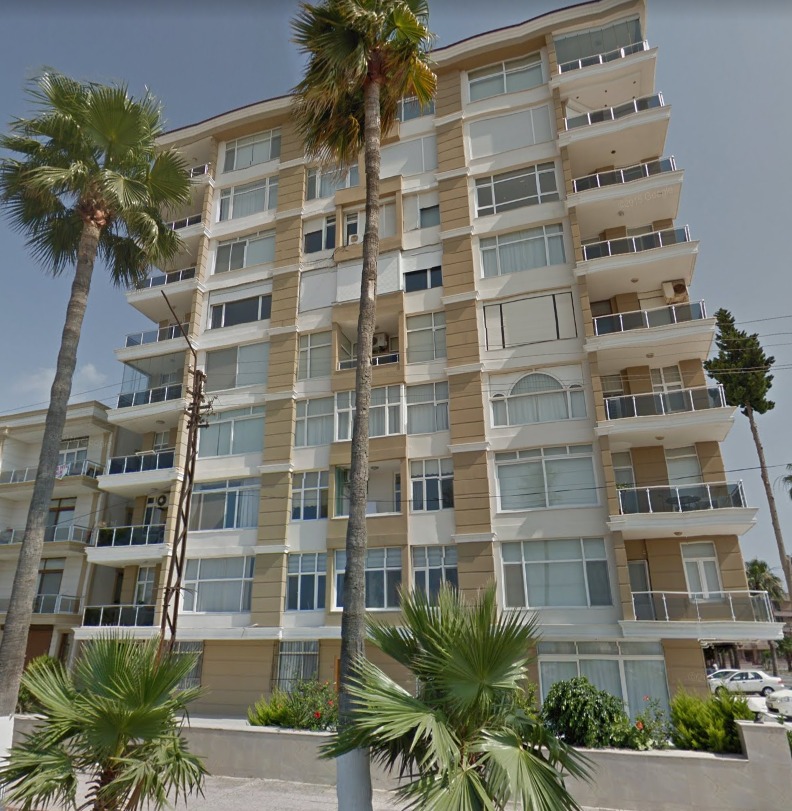
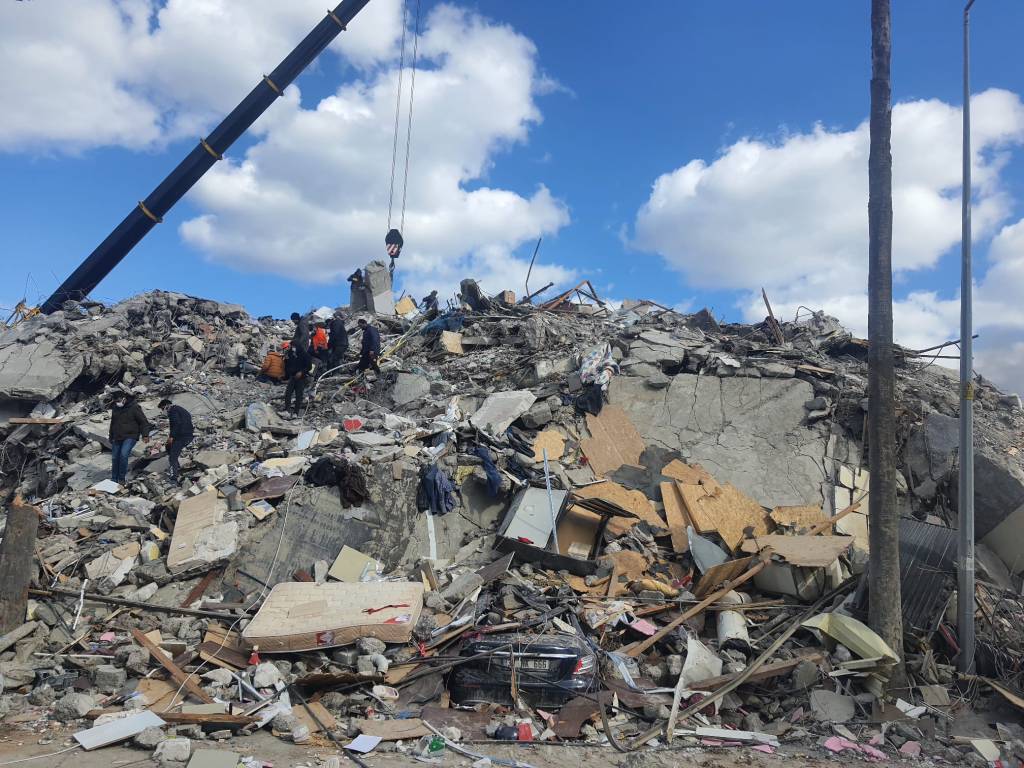
The 2nd task of the 2nd day was determined by the coordination center by combining the sound notifications under the rubble and the probability that we can hear the sound of the seismic sound monitoring device. Although the previous teams in the area reported that no search and rescue activity could be carried out there, it was estimated that the officer at the coordination center is locating the seismic sound listening device by controlling the remote volume buttons and touching the screen. I wish it was that easy. I wish the technology was as advanced as our dreams. I wish the buildings could be made earthquake resistant.
We found the 3rd task of the 2nd day not by guiding the coordination, but by the relations of the experienced members of our team. Together with ISDEMIR, we worked with the Police Department for 2 days. Our relationship with coordination had decreased. We were happy that we were working towards our goal, rescuing alive from the rubble, and being able to give some support to the people in the region. While I was working, I didn’t have much to do with the phone. I was the cameraman the day we pulled Mrs. Fethiye out of the rubble alive. I was the 4th person close to her. My job was to monitor the operation and at the same time ensure that the security in the area was adequate for everyone.
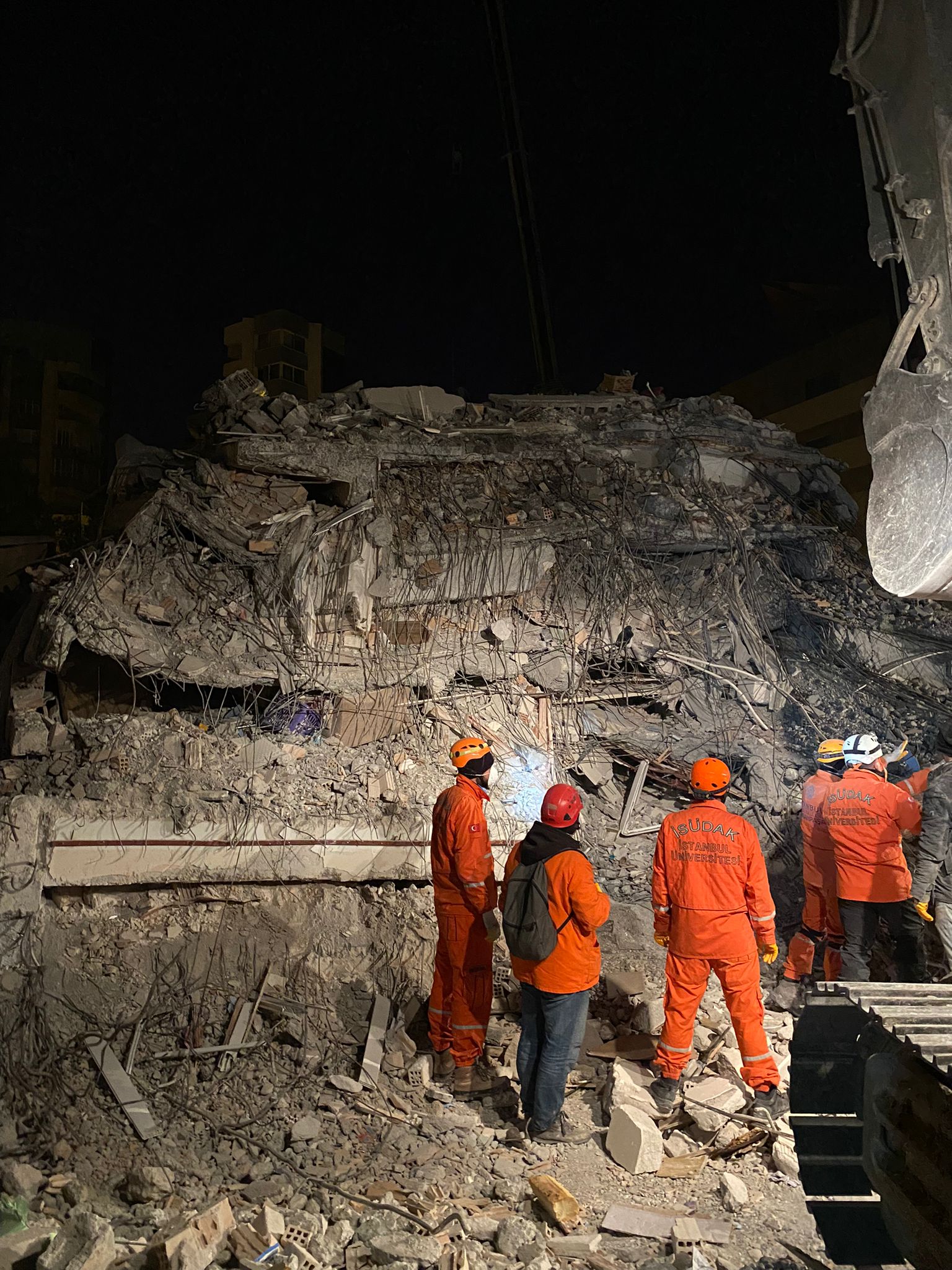
We decided to leave the area on the 4th day we were in the area and on the 5th day of the disaster, and after that process, our relationship with the phone returned to normal.

 e.i.
e.i. 
Leave a reply to Kargaşayı Çözmek için Kullanılan Telefonun Kargaşa Yaratma halleri – e.i. Cancel reply